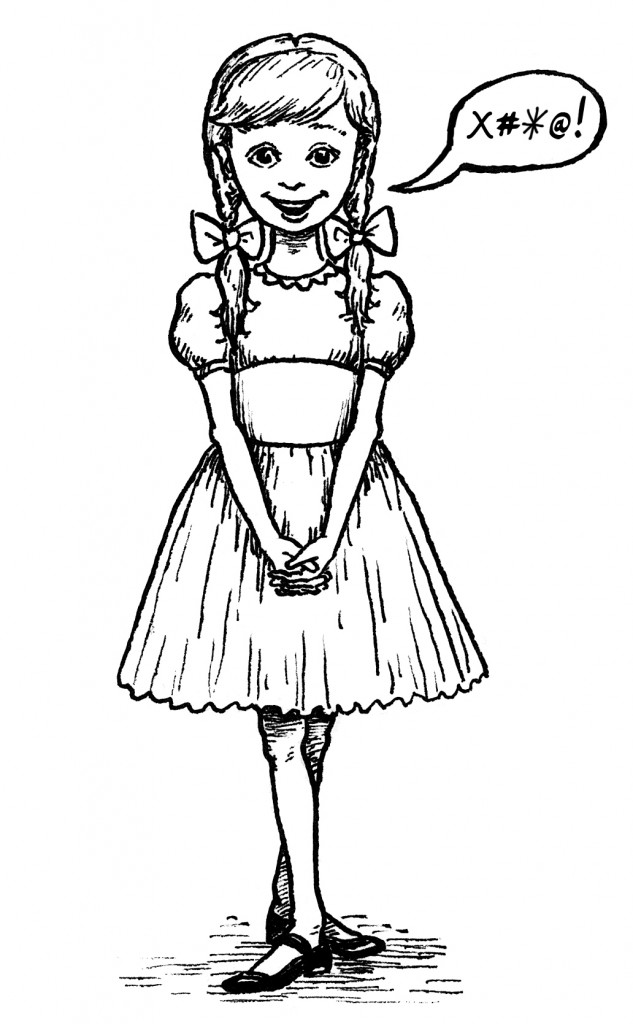
When there’s trouble afoot – a child grabs a toy or pushes someone – it’s common to hear a nearby adult say “Use your words.”
That’s frustrating for kids. “Use your words” isn’t enough information. Which words? What do I say? How do I do it? If we want kids to talk out their differences, instead of slugging each other, we need to give them effective words to say.
Especially for young kids, who are still developing emotional control and verbal skills, talking while mad is a huge challenge. That’s why offering them exact words to say can work such magic.
“Say ‘Stop!'”
“Tell her what you don’t like.”
“Tell her what’s making you mad.”
“Tell him what you’re worried about.”
Specifics like this help an angry child know what to do next. Sure, she’s using her words, but she knows what to say. Soon these words become a second nature. They need to be. Because when kids are mad they’re so busy raging inside about the immediate injustice that words fail them.
This happens to adults, too. “Words fail me.” We don’t know what to say. We either say the wrong thing or we don’t say anything. We all need help knowing what to say in high intensity situations.
Parents can’t always just “use our words” all the time either. If an angry child crosses a boundary, words aren’t enough. We need to physically stop her and remove her from the situation. It’s a hands-on job.
What should we say when we move a child? “It’s too hard for you to stop right now.” This acknowledges the situation – the child simply can’t muster the power to control her impulses at the moment. She can’t stop hitting/ knocking over the tower/ sitting on her sister without adult help. It’s too much. Simply say “It’s too hard right now” as you move the child away.
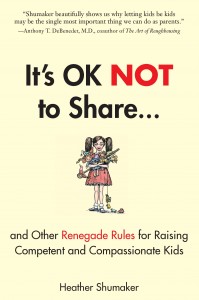
Having the right words handy is a godsend. That’s why I ended each chapter of It’s OK Not to Share with a list of effective words. Words kids can say. Words adults can say. It’s handy to have a resource of easy-to-remember words, especially in the heat of the moment, when words might just fail you.
What other phrases do you hear adults commonly use that bug you? What effective words do you rely on?