
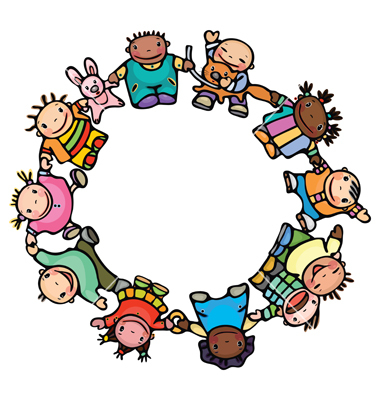
Kids spend much of their young lives herded into groups. Now we’ll sing, now we’ll march in a circle, now everybody clap your hands. Many group activities are terrific fun for young children. Kids often gravitate toward the group and love to sing together, play with a parachute or hear a group story. But there are always times when a child doesn’t feel like participating. What to do about that?
A dance teacher recently asked me how to handle kids who didn’t want to follow the group activity during the 45-minute class. It was especially frustrating for her since the kids all genuinely liked dance and wanted to be there. No one was forcing them to take the class.
Kids have the right not to participate in a group. Don’t force kids to join in. Here are some ideas why:
Don’t feel like it. Some days kids like being part of a group, and some days they don’t. Sometimes they feel ready to try new things, and other days life seems overwhelming. It’s OK for moods and interest to change day by day.
They’re scared or worried. Kids back away when they feel uncomfortable about something. Maybe the activity scares them (the whoosh of the parachute, a loud noise), maybe they’re worried about another child in the group and what she might do, maybe the group leader’s voice or style worries them. Feelings need to be respected. Try asking “Is there something you’re worried about?” or “Is there something you don’t like?”
Observers deserve respect. Some children are observers. Especially in group settings, they may not be ready to participate, but are actively learning by soaking up the group action around them. Many times a child who never opens his mouth to sing at school will come home and sing all the songs at home for his parents. This type of learning can’t be hurried. Kids will observe until they are ready to try more (often longer than an adult judges is ‘long enough’).
Kids are individuals. Some kids (and adults) don’t like groups. Some kids can’t take it. Groups can also be developmentally overwhelming or overstimulating for a variety of reasons. Remember, a group is made of a collection of individuals with varying needs.
Don’t force kids to participate, but don’t let their actions disrupt the group.
So what to do when it’s group time? Find a space where they can be. Don’t worry if they sit when everyone else stands. Set limits to protect both the individual and the group. “If you want to stand, stand in the back of the room so other kids can see the pictures.” “You don’t have to dance, but that’s what we’re doing now. Move to the window so you don’t get bumped.”
It’s hard for us to watch a child who doesn’t do what the group does. As an adult, it can feel disruptive or disrespectful. It can also pain us, seeing a child who doesn’t fit in or isn’t choosing to fit in. But it’s worse to force conformity. What sort of lesson is that? Children need to learn to trust their feelings and fears. When it comes to groups, we don’t want kids to learn that it’s more important to conform and be like the rest even if they feel uncomfortable. Peer pressure only grows stronger as the years go on.
What’s your experience balancing group needs with non-participation? Have you ever seen the wonders of observation?
Find more in It’s OK Not To Share…And Other Renegade Rules for Raising Competent and Compassionate Kids, a “Best Parenting Book of 2012” by Parents magazine’s Parents.com. Or visit heathershumaker.com to learn more.