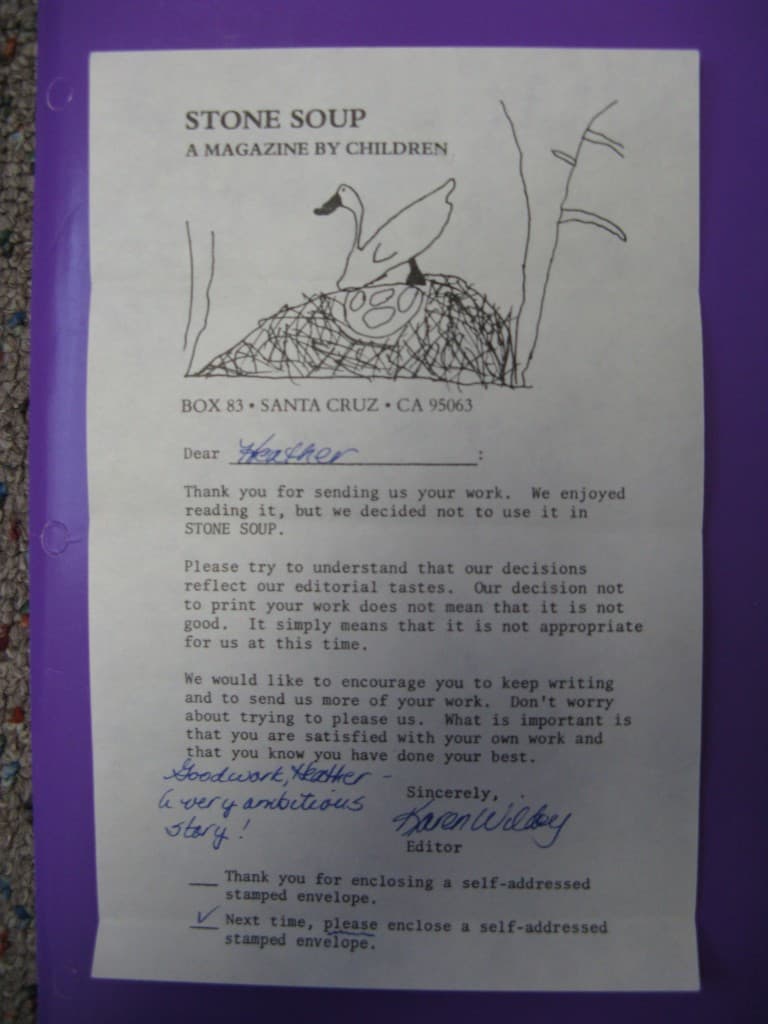
My very first rejection letter came in 3rd grade. I’d been writing endless stories by then, and thought I was pretty good.My teacher loved my stories and encouraged me to apply; my parents loved them. I was sure I would win and be published in the magazine.
When the rejection letter came I was shocked. What – not mine? I was shocked but not devastated. Mostly I remember feeling intrigued. Editors had selected other children’s stories instead of mine, OK, this writing thing was harder than I had thought. The rejection made me more determined.
I’m grateful for that early rejection letter. It got me used to rejection at an early age. It helped open my eyes to the fact that there are other talented writers out there, and that I needed to truly put in some EFFORT to make my dreams come true.
Kids need to experience rejection when they’re young. Rejection of all kinds. It’s part of taking risks. The very first rejections are usually social risks like asking to join in a game: “Can I play with you?” In my book It’s OK Not to Share I delve into the benefits of kids facing risk and rejection. There will always be risk in our lives, and learning to accept the possibility of rejection, learning to cope and moving on are life skills we all need.
Besides, the earlier kids experience rejection, the more matter-of-fact and common place it becomes. “She might say ‘yes’ and she might say ‘no,” we can remind kids. Rejection does not have to be disrespectful or devastating. Sometimes it’s an answer that propels us forward in new ways. Sometimes it’s the answer we need to try again. To get better at something. To improve our emotional coping skills.
Rejection is always part of life, as long as we change and grow and take risks.
I’m still determined to write and publish. What about you? Do we shield kids too much from risk and rejection? Have you ever benefitted from rejection?