When I wrote about Centers in child care programs last week, a reader asked me a fundamental question: How do you find a play-based program? How do you know if a preschool or daycare is truly play-based? Her question deserves a thorough answer.
Why? It’s not that simple. Many programs speak the “play” language. When I called looking for a good preschool program for my children, I heard a lot of talk about play. Talk but not action. “Oh, sure, we’re a play-based program. Here’s the schedule: music, Spanish, math, science, gym…”
How to sort through the talk and evaluate a real gem of a program?
Observe. You MUST visit the school and observe the classroom. Often you’ll find that although the school has good intentions about play, in reality, play is given short shrift. I’ve often seen “play time” used as a 2o-minute “in between time” as the teacher sets up the next teacher-led structured activity. You will never know unless you visit in person, preferably for 2-3 hours.
Check the schedule. If there’s too much “enrichment” time, beware. I’ve witnessed supposedly play-based programs with cluttered schedules like this: circle time, music, Spanish, math, lunch, lunch, science, gym… There’s simply no time left for unstructured play. Children need blocks of time for unstructured play (at least 1-2 hours at a time). Plus, many kids have a hard time with transitions; when the day is broken up with scheduled activities kids are always in transition.
Are dress-ups welcome? Do you see firefighter hats, tiger suits, princess dresses and capes? A huge part of play includes dressing up and playing “let’s pretend” games. It’s social, it’s imaginative, and it involves deep learning. Schools like Montessori rarely have dress-up clothes at all.
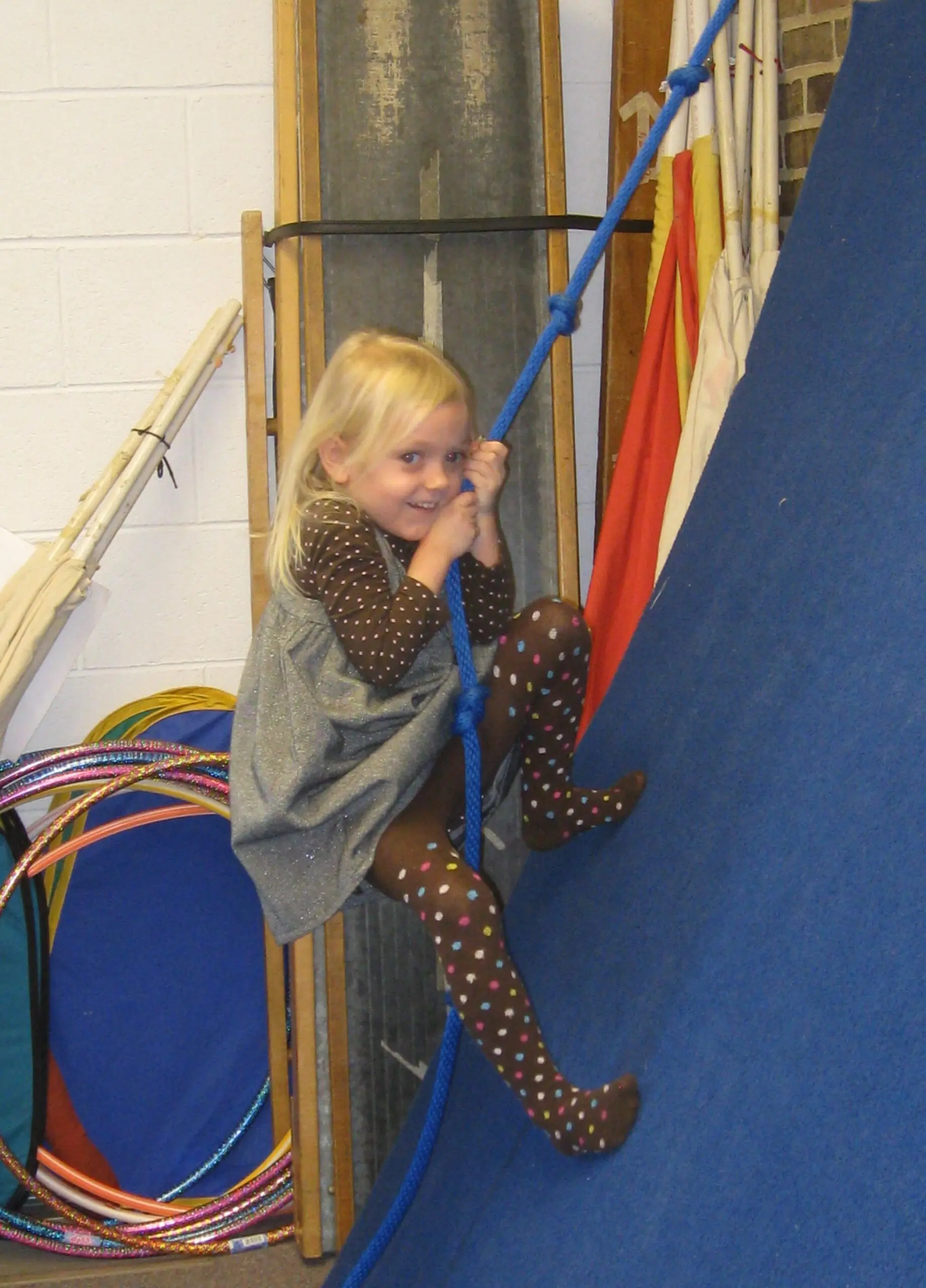
Is there big muscle space? Kids need the option to truly play. This means having space for loud, fast and big play available: chasing, jumping, climbing, biking, swinging, banging. Ideally, kids need the option to access the outside or a big muscle room at any time during play time. Play should not be confined to quiet rooms and tables and chairs.
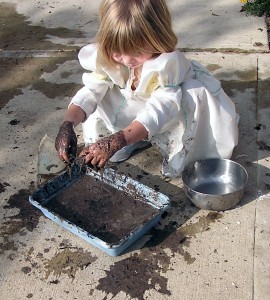
Don’t worry about pretty When you evaluate a classroom, don’t dwell on how cute and pretty the classroom is. True play is often messy. The space should look as if active kids use it. Of course, a beautiful classroom can be a welcoming place for play, but it’s no guarantee. It’s what goes on between the people that counts.
Watch the teachers. Do teachers constantly give directions and show models? (“Everyone get 2 black pompoms for the eyes…”) Are they busy directing and controlling the children all the time? Do teachers insist on long circle times instead of letting children pursue their own interests and friendships? Are they respectful of children’s play ideas or dismissive? (“That’s not nice. What about letting the T. Rex be friends with the other dinosaurs?”) Do they direct play? (“You three play in the block corner.” “How many blocks are green?”) or do they support play? (“I see you’re building a ship. What do you need for your game?”).
Forget the ABCs. A true play-based program focuses on pre-literacy, not literacy. Songs, finger plays, puppet shows and stories are all appropriate. Fixation on the alphabet is not. Good play-based programs integrate literacy into play by making signs “Lucy’s Ice Cream Store” and writing down dictated messages and stories that come from the kids’ hearts. “Once there was a pirate named Jack who wanted to be a mermaid…”
Seek out a place with conflict. One of the main values of play is for kids to learn to negotiate and problem-solve with peers. (“You have the red truck! “I need the red truck now!”) That’s the skill of conflict mediation. Play-based programs recognize the HUGE value of teaching kids conflict mediation skills, and don’t solve all kids’ problems for them. So ask. “Do you teach kids conflict mediation? Tell me about that.”
Think like a kid. If you were 4-years-old, would you want to go there? Is this a place that truly welcomes children’s play, children’s fears and children’s ideas? Teachers should be there to guide and give skills – the rest is up to the kids.
Take heart. Programs that truly “get” play are out there, including the School for Young Children in Columbus, Ohio, where I went to school. They even let kids box and wrestle as part of healthy roughhousing play. Read more about it in It’s OK NOT to Share…And Other Renegade Rules for Raising Competent and Compassionate Kids.
What else belongs on this list? How did you know you’d found the “right” school? Do you know a school that’s a true gem?