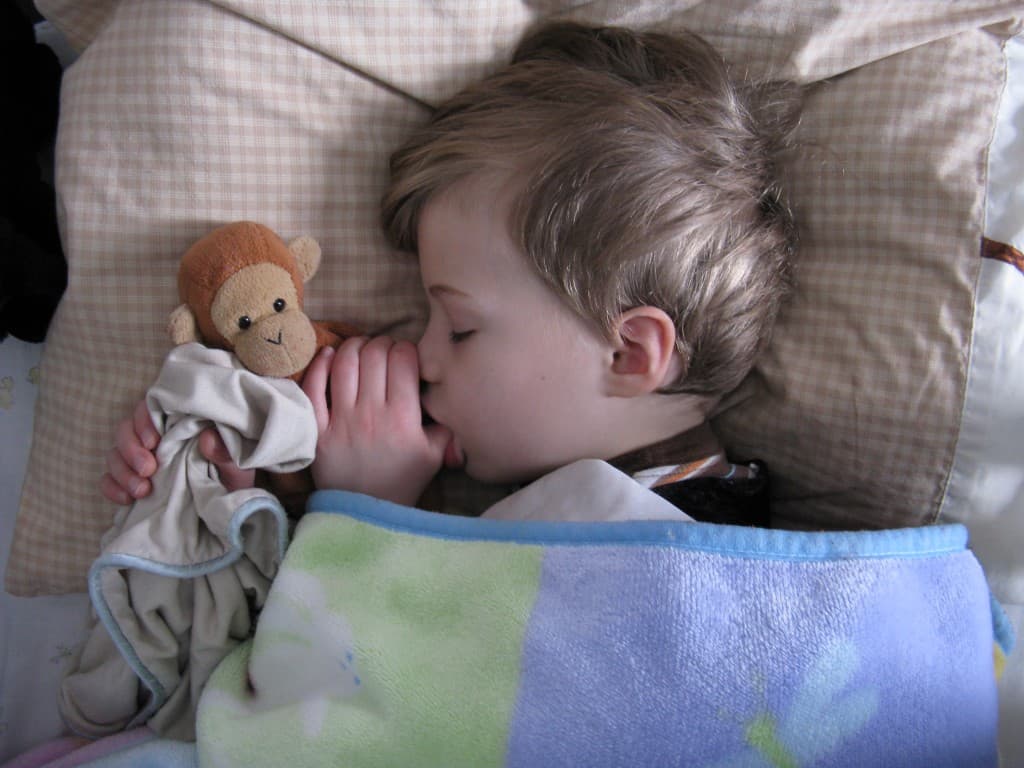
My kid’s a napper. Still, at age 5, he collapses daily for a serious, 2-hour long, snoozing, sustaining nap. His bedtime is 8pm, but still he NAPS. Next year he’ll be facing full-day kindergarten, where the schedule doesn’t include rest time on little mats anymore.
Full-day kindergarten is the norm now. In our case, he’ll be facing an 8+ hour day (7 hours of school plus bus ride). That’s a demanding schedule for little tykes.
At a recent Open House, I raised the Nap Question. “He’ll adjust,” the teacher said. “They all do.” “What about a quiet rest time with a book after lunch?” I asked. The teacher told me they do math after lunch. “You don’t want him to miss math, do you?”
Well, yes.
If his brain needs to sleep, a math lesson will go over like a lead balloon. Sleep helps organize learning and is key for memory and focus. A generation ago, sleep used to be considered an essential part of the school day for kindergarteners. Kids haven’t changed in that time. Schools have.
Besides, he’s learning math and science everyday:
- Pouring sand and water – learning about volume and displacement
- Seeing who gets the biggest cookie – size, concepts of bigger and smaller
- Inventorying his stick collection – counting, sequence
- Taking one of his toy soldiers out of the battle – subtraction
- Adding more pirates to his boat – addition
He’s five. He’ll get it; I’m not worried. For now he’s getting what he needs through naps and play. Formal math can come later when his brain is ready to receive it.
Let kids sleep. It’s the best learning a young brain can do.
How do we teach good sleeping skills? What do we hope to achieve when we push young kids ahead of their developmental abilities? Where does SLEEP rank among priorities in your life?