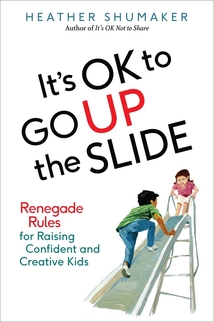
The book is here! I’m on the radio today celebrating the release of It’s OK to Go Up the Slide, and everywhere I go – from Denver to Vancouver to Boston – I’m hearing people share the stress points in their lives with kids. Technology. Homework. Strangers. News disasters. Gender roles. Kindergarten curriculum. Lack of time to play and time with nature. All these topics are in the book. All these stress points.
When things are out of balance, it’s time to question the way things are done. It’s time to go up the slide.
That’s why I’m so excited about this new book. It’s going to make some people nervous. It’s going to make some people mad. If kids get hold of a copy, it could cause a revolution (you mean there’s no reason for me to do this worksheet?!)
As early reviewers said: “It’s going to rock some boats, challenge thinking, and nudge adults in the right direction.” (Jeff Johnson, Let Them Play) and “Heather Shumaker stops to re-examine almost all the conventional wisdom about childhood…She’s my hero.” (Lenore Skenazy, Free-Range Kids).
If you love these ideas and want to support the book – the best way to celebrate is to write a review on Amazon, Goodreads or your favorite book spot. The book is out TODAY, March 8 so it’s open for reviews.
- Sometimes being a good parent – or a good teacher – means breaking all the rules.
- If something’s bothering you, it’s time to make a change
- Just because everyone’s doing it, doesn’t mean it’s right for child development.
- When adult expectations clash with child development, it’s time to change the adults, not the child.
See you at the top of the slide!
Early Bird gifts – Thinking of of getting a copy? Order a copy of It’s OK to Go Up the Slide this week and receive free gifts as a thank you. This special pre-order offer extended until March 13, 2016. Simply 1) buy the book from any bookstore 2) send an email to slide@heathershumaker.com saying where you bought it. Order here at heathershumaker.com
What stress points do you see in families’ lives? What are big ways you see adult expectations clash with what children need?